My diary of an afternoon in Chong-kemin
Chong-kemin is a river valley located just a couple of hours from Kyrgyzstan’s capital city Bishkek, and near the Kazakhstan border. With the glacial Chong-Kemin river running through it, the pristine, pastoral region is dotted with seven small villages, of which Karool-dobo (where I stayed) is one.
I arrived in the afternoon not quite sure what to expect, after a hair-raising drive from Bokonbaeva (a dusty little town near the southern shore of Issyk-kul lake). My taxi driver drove confidently enough into the verdant Chong-kemin valley, before starting to look a bit lost as we turned into a dirt track. After a few hesitant turns, he stopped the only person around, a man on a horse herding three more along the track, and was met with a “follow me”: so we followed the horseman and his horses along the trail until a tiny hamlet emerged around us. Soon enough, we reached a large metal gate towards which our horse guide silently pointed us, then cantered away.
A young boy opened the gate, and we drove in. It was a cosy village home, with a yurt in the front garden – a home-stay and the CBT coordinator’s offices, if you can call the little dining room that, all rolled into one. (CBT or Community Based Tourism is a national association in Kyrgyzstan, which, with the support of USAID, aims to develop sustainable tourism initiatives in the country.)
We had arrived in Karool-dobo, my home for the next day. My ‘check-in’ process involved simply dropping off my bags at the colourfully decorated yurt where I would sleep that night, and sitting down to tea with Lira, my host, and John, the only other guest that night (a Canadian who had been hiking through Kyrgyzstan for five weeks).
I drank tea, snacked on fried bread delicacies typical of the region, and chatted with Gulnabaz, Lira’s sister, who spoke marginally better English than her. It transpired they were about to go to the shops to procure supplies for the evening meal – only after asking me what I’d like to eat, of course, to which I’d answered Beshbarmak, the Kyrgyz national dish – so I decided to tag along (I wanted to pick up some beers for the evening too). Off we went on the village path, until we reached the small grocery store which stocked everything from fresh vegetables to, yes, beer.
From there, I decided to carry on for a longer walk to the next village in search of wifi – which was apparently only available in the neighbouring village – and the Chong-kemin river (not necessarily in that order), armed with directions that (I think) required me to simply follow the road, and turn right wherever it ended.
I trudged off, taking in deep breaths of the clean cool air. Calves bayed around me. Chickens clucked. A horse neighed in the distance. Clusters of sheep and goats chomped happily on wild grass.
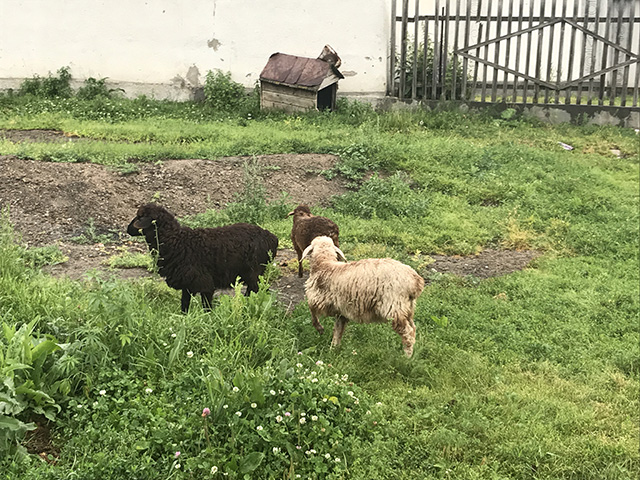
I walked on until a highway slicing past signalled the end of Karool-Dobo. I asked a man and his little boy walking past about the neighbouring village (the one with wifi), but we weren’t able to understand each other, I gave up, secretly not too sad about going completely off-grid for the day.
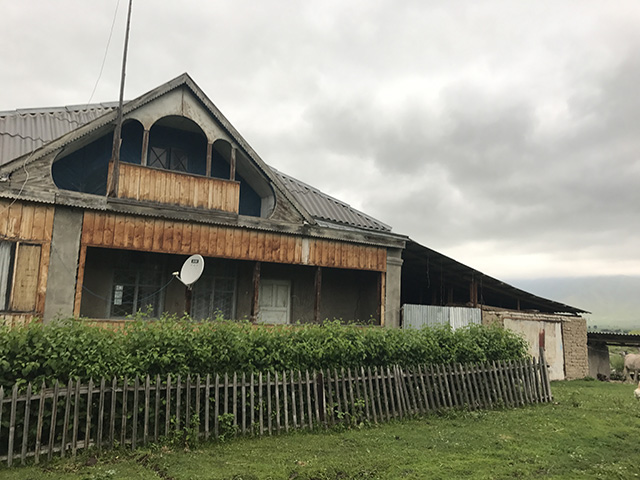
Dark clouds were starting to roll in. As I made my way back, it started drizzling. I spotted a crumbling old wooden house designed in a vintage alpine architectural style – one of a few I’d seen around the village, sticking out incongruously among the mud huts and flat concrete houses – and the gate was open, so I decided to walk in to investigate it from up close. The house had looked abandoned, but minutes later, a lady peeped out from behind a window to check on their random intruder. Again, we didn’t manage to communicate, but she disappeared out back only to open up the barn door for me to take cover from the rain. Her little daughter joined her to try and help with translation but it was in vain.
After a few minutes of sheepish smiling at each other, it looked like the rain was letting up, so I set out again. In a few minutes, I came upon the other CBT guesthouse, one of only two in town – this one a lot more modern, if a touch less authentic – and I walked in to shelter from the rain, which had started pouring down again, this time in earnest.
Here, a young man who spoke decent English welcomed me, as his grandmother grumpily muttered away to herself on a nearby sofa. I sat under an awning on their verandah chatting to the boy, when his mother, who runs the guesthouse, returned with her daughters in a minivan laden with grocery shopping.
Before I knew it, I was being welcomed into their kitchen for a cup of tea. The table was replete with bowls of biscuits, chocolates, jam, and homemade snacks – as is the tradition in Kyrgyzstan. Tea was brewed and we all sat around drinking, grazing, and chatting in broken English. This was genuine, traditional, unaffected Kyrgyz hospitality at its finest.
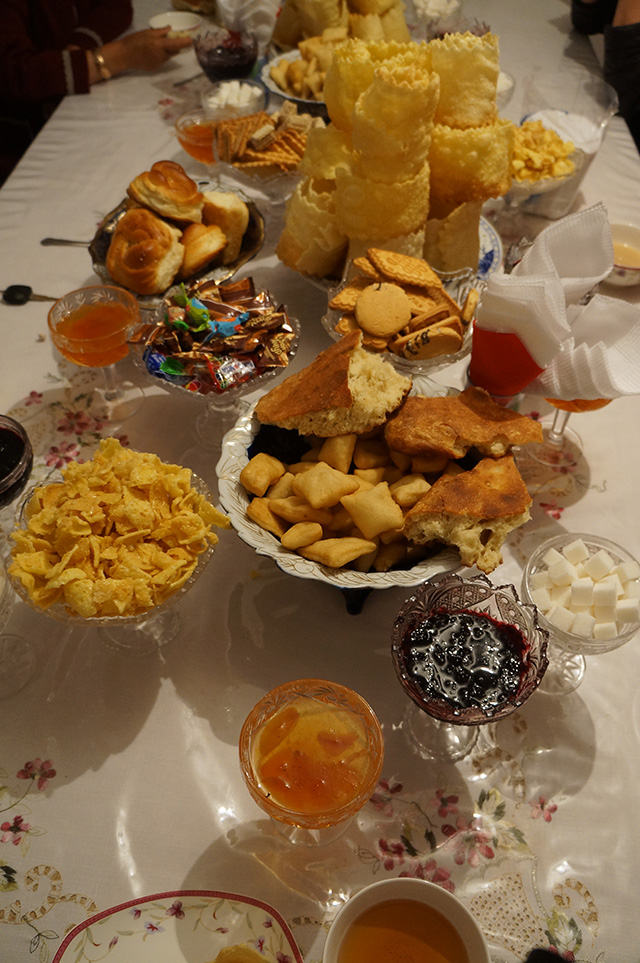
After consuming copious amounts of tea, and a delicious homemade egg biscuit (some of which they also packed up for me to take home!) and making certain the rain had stopped, I ventured back out.
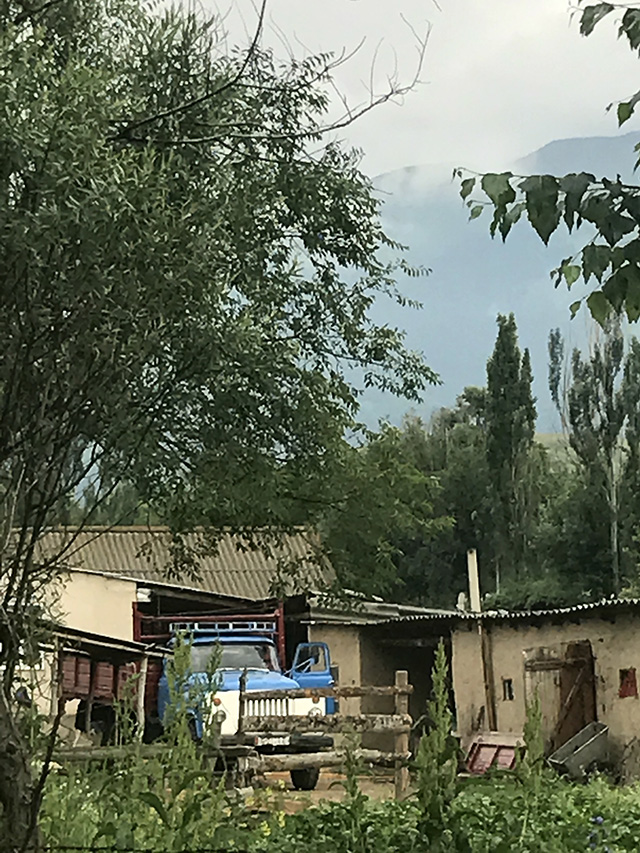
I walked towards the river. A little boy expertly riding a horse rode past. A retro truck lumbered into a nearby yard, sending a couple of grazing lamb scuttling away, its work done for the day.
Soon, the walking trail ended, giving way to overgrown wild grass and muddy puddles. I soldiered on, as I could hear the river gushing in the distance. My shoes became wet.
Suddenly I saw the river, snaking its way across the horizon. I went a little further along until I got a good view, the rest of the way to the riverbank seeming a bit too impenetrable for this rainy day.
The river gurgled, bubbled and tumbled along, playful and joyous. The lush green mountains fringing the valley loomed over it as if bemusedly watching a child at play. A slight breeze rustled the grass and firs on the riverbank.
It was beautiful, it was surreal.
I took it all in, frantically snapping away on my camera, but trying even harder to imprint this raw, untouched, natural beauty in my mind.
I stood there for what felt like a minute, or an hour.
Then turned around to return. I took a few steps, and I promise, it felt like the gushing of the river grew louder – almost as if to say: “Stay a little longer? Look how much louder I can roar, look how beautiful my rapids are, look how much fun I am!” (It must have been the acoustics of the angle I was standing in, of course).
I smiled to myself, at my hyper-imaginative mind, and then back at the river, and did indeed spend a few more minutes there, promising to see her again (because, of course it was a she) soon.
The chirping of the birds grew louder as the sun made its journey westwards.
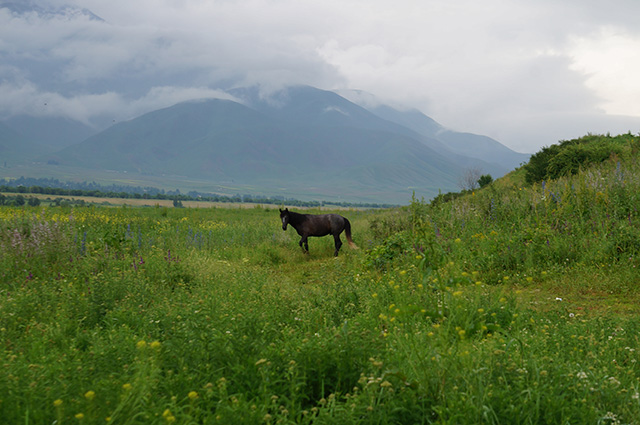
As I slowly walked back, I saw the swish of a tail out of the corner of my eye. I turned to my left to see a wild horse chomping on his dinner, while a couple of birds made themselves comfortable on his back. He saw me too.
He turned and took a few tentative steps towards me. We stood there and regarded each other in silence for a while. I took out my camera and started clicking his photographs. He stood, posed, patiently turned this way and the other, until I had clicked my fill, and gotten my ‘ultimate Kyrgyzstan photo’ – you know the one, mountains, valley, horse.
Finally, we decided to say goodbye, he walked off towards the hills, and I made my way back to my yurt.
<Chong-kemin is ideal hiking country; I went on a horse-trek into the steep mountain slopes the next morning with a local guide – who made up for his lack of professional guiding or English language skills with friendliness – to enjoy incomparable vistas of the valley, before making my way back to Bishkek.
This account is of just one part of a 5-day trip to Kyrgyzstan, in which I also spent time in Bishkek and the Southern coast of Issyk-kul lake (the world’s second largest alpine lake). If you would like some more information on travelling to Kyrgyzstan (as it’s such an under-the-radar and undeveloped destination still), I’d love to be able to help, so just ask in the comments or pop us an email! >

 SG Consulting
Leave a reply to 8 of the world’s most unique places to stay – revealed! – Travel Now! Cancel reply